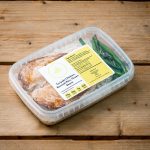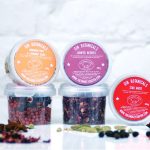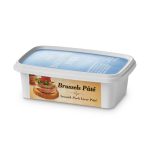
Yes, most rigid tamper evident containers are recyclable.
The majority are made from polypropylene, commonly identified by the number 5 plastic code. Polypropylene is widely used for food packaging because it is strong, lightweight and suitable for many hot, chilled and frozen applications.
However, whether a complete pack can be recycled depends on more than the container itself. Its lid, label, sleeve, colour and any remaining food residue can all affect how successfully it is collected, sorted and reprocessed.
With Simpler Recycling changing household collections in England and Extended Producer Responsibility linking packaging fees to recyclability, understanding these details has become increasingly important for food producers choosing tamper evident containers.
What plastic are tamper evident containers made from?
Most rigid tamper evident containers are manufactured from polypropylene, usually referred to as PP.
Polypropylene carries resin identification code 5. This is the small number that may appear inside a triangular symbol moulded into the base of a container.
The code identifies the main plastic used to manufacture the product. It is not, by itself, a guarantee that an item will be accepted by every recycling service.
| Code | Material | Common food-packaging uses |
| 1 | PET, CPET and rPET | Bottles, punnets and some food trays |
| 2 | HDPE | Milk bottles, larger tubs and containers |
| 4 | LDPE | Bags, flexible packaging and films |
| 5 | PP – polypropylene | Tamper evident containers, deli pots, buckets and tubs |
| 6 | PS – polystyrene | Some yoghurt pots and food trays |
| 7 | Other or mixed plastics | Multi-layer or otherwise unclassified packaging |
Why is polypropylene used for food packaging?
Polypropylene offers a useful combination of strength and flexibility. This makes it particularly well suited to tamper evident food packaging.
It can flex during filling, closing and transport without cracking easily. It also allows the tamper evident feature to break as intended when the container is opened for the first time.
Depending on the specification, polypropylene packaging may be suitable for:
- Hot filling
- Chilled food
- Freezer storage
- Short-term microwave use
- Liquids and sauces
- Repeated handling during transport
SystemPAK containers are suitable for hot filling at temperatures between 85°C and 95°C, subject to the appropriate product testing. Standard empty containers are tested to –18°C, while specialist resins are available for freezer-grade applications down to –32°C.
Always check the technical data sheet and test the container with your own product, filling process and storage conditions before placing a large order.
How are UK recycling collections changing?
Simpler Recycling is intended to make recycling collections more consistent across England.
Since 31 March 2026, local authorities have been required to collect a common set of recyclable materials from households. This includes plastic pots, tubs and trays made from PET, PP and PE, alongside other core materials such as paper, card, glass and metal.
For PP tamper evident containers, this should make household recycling more straightforward. However, collection instructions can still vary while local services and sorting arrangements are updated.
Consumers should therefore continue to follow the guidance provided by their local authority.
Plastic films and flexible packaging are being introduced separately, with household collection required from 31 March 2027. This is particularly relevant where a rigid tray is used with a flexible lidding film.
Why recyclability can affect packaging costs
Extended Producer Responsibility for packaging, commonly known as packaging EPR, makes obligated producers responsible for more of the cost of managing household packaging waste.
Obligated producers must report packaging data, and large producers must additionally assess the household packaging they supply using the Recyclability Assessment Methodology, or RAM.
RAM assesses packaging across several stages, including whether a component is likely to be:
- Collected
- Successfully sorted
- Reprocessed at scale
The resulting assessment places packaging into a Red, Amber or Green recyclability category.
From the 2026–27 scheme year, packaging waste management fees are adjusted according to these ratings. Packaging that is difficult to recycle may attract higher fees, while more readily recyclable formats may benefit from lower fees.
This means packaging design can affect both environmental performance and future business costs.
Our guide to Extended Producer Responsibility explains the reporting requirements in more detail.
Packaging choices that can affect recyclability
A polypropylene container may be recyclable, but the complete packaging format must be considered. Four design choices are particularly important.
1. Use compatible materials where possible
A PP container paired with a compatible PP lid creates a simpler packaging format than a pack made from several different materials. Reducing unnecessary material combinations can make packaging easier to sort and recycle.
This does not automatically guarantee a particular RAM rating, as size, colour, labels, adhesives and other components must also be considered.
2. Check trays and lidding films separately
A rigid PP tray and flexible lidding film may need to enter different recycling streams.
Where the materials need to be separated, clear instructions should tell the consumer to peel away the film before recycling the tray.
A compatible mono-material film may simplify the format, but its suitability will depend on the product, required barrier properties and sealing process. Speak to our team before making changes to an established packaging system.
3. Consider how colour affects sorting
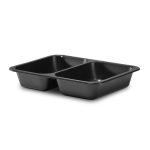
Black plastic can present challenges for some recycling facilities.
Traditional carbon black pigments absorb the near-infrared light used by optical sorting equipment. This can prevent the machinery from identifying the plastic correctly, even when the material itself is recyclable.
Alternative detectable pigments are available, while natural, clear or non-black colours may be easier for sorting systems to recognise.
If you currently use black packaging, our team can help you explore the available options.
4. Choose labels and sleeves carefully
Decoration can also influence how a container performs at the end of its life.
In Mould Labelling integrates the label into the container during manufacturing. When compatible materials are selected, this can create a straightforward decorated packaging format without a separate adhesive label.
Printed cardboard sleeves can be removed and placed in the paper and card recycling stream, leaving the container to be recycled separately.
Self-adhesive labels sit between the two. A smaller label on a compatible substrate is generally less of an issue than a full-wrap label, though the adhesive used also matters.
Helping consumers recycle food packaging correctly
Clear disposal guidance can make a significant difference to whether packaging is successfully recycled.
Where appropriate, encourage consumers to:
- Empty the container and remove remaining food
- Give it a quick rinse
- Follow the recycling instructions printed on the pack
- Check their local authority’s collection guidance
- Separate sleeves or films where instructed
- Reattach compatible lids where local guidance recommends it
Food residue can reduce the quality of recovered material, particularly when containers have held oily, fatty or dairy-based products. Asking consumers to empty and rinse the pack can help it enter the recycling process in a cleaner condition.
On-pack recycling labelling is the clearest way to communicate this, and any claim made should accurately reflect the complete packaging format rather than the main material alone.
What about board trays and compostable alternatives?
Rigid plastic is not the only option, and for some products a board-based tray or a compostable format may suit the application better.
Our EcoPAK range includes cardboard top seal trays, which are dual ovenable and freezer safe. These trays currently use a PET lining to provide the barrier and sealing properties the format needs.
Because a lined board tray combines two materials, its disposal route differs from both plain card and rigid plastic. Where these trays are used, check the current guidance for the specific product and make sure any on-pack instructions reflect the complete format.
We are also developing a board tray with a plant-based PLA lining, made from renewable vegetable sources rather than fossil-based plastic. This is intended to give food producers a compostable option within the same tray format. Contact our team if you would like to be kept informed as this range becomes available.
It is worth noting that compostable packaging is not automatically a better choice than recyclable plastic. It requires an appropriate collection and treatment route to deliver its benefit, and it should not be placed in conventional plastic recycling. For operators with access to a suitable organic or commercial composting waste stream it can work well. For others, a recyclable rigid container may offer a clearer disposal route.
Visit our sustainable packaging page to explore the available options.
Frequently asked questions
Are tamper evident containers recyclable?
Most rigid tamper evident containers made from polypropylene are recyclable. Whether they are accepted at the kerbside will depend on the complete packaging format and the guidance provided by the local authority.
What plastic code are tamper evident containers?
Most tamper evident food containers are made from code 5 polypropylene. The identification code may be moulded into the base of the container.
Does the number 5 symbol guarantee kerbside recycling?
No. The symbol identifies the type of plastic used; it does not guarantee that every collection or recycling facility will accept the item.
Local guidance and the design of the complete pack should also be considered.
Can the lid be recycled with the container?
If the lid is made from a compatible material, it may be recyclable alongside the container. Consumers should follow the disposal guidance provided on the packaging and by their local authority.
Is black food packaging recyclable?
Black plastic may be technically recyclable, but traditional carbon black pigments can make it difficult for some optical sorting equipment to detect.
Non-black containers or packaging made with detectable pigments may be sorted more reliably.
Are EcoPAK board trays compostable?
The current EcoPAK cardboard top seal trays use a PET lining, so they are not compostable. A version with a plant-based PLA lining is in development. Contact our team for the latest position on availability.
Does recyclability affect EPR packaging fees?
Yes. Under the system of modulated fees, the recyclability assessment of household packaging influences the fees paid by obligated producers from the 2026–27 scheme year.
The final rating depends on the complete packaging component rather than the main material alone.
Find the right packaging for your product
Choosing sustainable packaging for food involves balancing recyclability with food safety, product protection, filling requirements, storage and presentation.
The SystemPAK team can help you compare suitable tamper evident containers and other food-packaging formats. Contact us for advice or request free samples to test with your own product.